

Jack in the Box
"We train soldiers for warfare, yet fail to prepare them for peace."


Editor’s Note:
This article was written by former U.S. Army Brigadier General and NSL4A member, Greg Smith, who served 35 years in uniform. It was published June 16, 2026, on “Paul’s Substack - Dispatches from a Dangerous World.” In it, he talks about the problems some “battle-ready warriors” face reentering society after their military service — high divorce rates, drug and alcohol abuse, and suicide. Smith shares a personal story of tragic consequences for one such soldier and he provides a recommendation for mitigating the dangers.
Jack in the Box
I first met Jack as he shifted and pouted like a petulant child in a courtroom. I was a volunteer in a program to keep veterans who were convicted of minor offenses out of jail. Sensing that the judge’s patience was evaporating quickly, I asked to conference with Jack in the hallway outside the courtroom.
“You need to lose the attitude ASAP and show that judge some respect,” I growled. “Or else you can plan on spending some more time behind bars.”
“I’m sick of his shit,” he shot back. “In fact I’m sick of this whole program.”
“Well, it’s up to you, Pal. But think of your wife and kids before you do something stupid in there that gets you locked up.”
He said nothing, just looked down at his well-worn combat boots. After a few moments and a few deep breaths, he shook his head and walked back into the courtroom with me.
I can’t tell you we ever became good friends. I tried to help him and I think he understood that I was on his side. I never learned his full story, but I knew a few details. Jack was a US Army sergeant in an engineer unit that detonated IEDs in Iraq. I think he was injured overseas. When he returned home, he fell into drug addiction - probably started by the oxycontin prescribed for his back pain. Jack eventually became tangled in the criminal justice system because of petty crime to support his habit.
What I saw in court was a charismatic, intelligent - snarky at times - guy who was bitter that the system hadn’t worked out for him. Other veterans in the program admired his wit and independence - he was a natural leader. Jack was often accompanied in court by his wife, a quiet woman whose warm smile barely concealed lots of pain and anxiety. They had several kids, one of whom was headed to college. I think Jack sincerely wanted to get his criminal record behind him, shake his addiction, and start a new and better life - but things don’t always work out that way.
I was saddened, but not surprised when I heard that Jack had a drug relapse, overdosed, and fell down a flight of stairs. His injuries were fatal. I decided to attend his funeral, expecting to sit behind his wife and kids in an empty church.
However, when I arrived at his funeral, I had trouble finding a parking space. To my amazement, the church was packed with mourners. Speaker after speaker told sad, poignant, and even funny stories about Jack the Little League star, Jack the dependable paper boy, Jack the Boy Scout, Jack who faithfully mowed their lawn, Jack the friendly neighbor … I almost wondered if I was at the right funeral.
I thought long and hard about what Jack had taught me. In the United States Army we do an excellent job of turning All-American boys and girls into warriors who will fight and win tomorrow’s wars. Our soldiers are the key element that makes us the world’s most formidable fighting force. During training soldiers gradually learn how to shut off voices of reflection, compassion, and mercy as they demonize our nation’s enemies and prepare to kill or capture them. And I don’t take issue with that - soldiers must summon righteous anger and rage to have the emotional strength needed to kill another person - and they can’t be troubled by nagging thoughts that the target is someone’s brother or sister, husband or wife, son or daughter. Our nation has been at war, off and on, for nearly a century - citizens who are prepared to kill our enemies in defense of our homeland are essential for our collective defense.
But here’s the problem - when they transition out of the military, we don’t teach former warriors to be human again. Having shut off the emotions that interfere with a soldier’s ability to kill, we don’t know how to flick the switch that turns on the elements of “our better angels.” And the evidence is in the numbers - nearly 18 US veterans take their lives every day, which is considerably higher than the national average. About 4% of military marriages end in divorce each year, double the rate for civilian marriages. Not surprisingly, estimated rates of substance abuse among veterans vary from 14% to 18% - numbers that are significantly higher than the general population. This data set should serve as a “check engine” light for our society that our veterans aren’t getting what they need.
When a soldier returns from a war zone, they almost certainly want one thing - to go home and resume their previous lives as much as possible. They’re required to complete mental health surveys and usually they’re screened by counselors. If a reservist reports any psychological symptoms, he or she is retained on active duty to receive psychological support. Active duty soldiers who report psychological symptoms will receive mental health services. But they’ll also have modified duties, possibly they’ll be transferred to another unit, or potentially separated from the service. There’s also the stigma of seeking mental health support which, like it or not, is still viewed as a weakness within our warrior culture. Needless to say, many soldiers who are experiencing mental health issues, including PTSD symptoms, never report them in fear of the consequences. And as a result, many veterans reenter the civilian world having never received the mental health support they badly need to avoid relationship conflicts, substance abuse, or self-harm.
So what’s the answer? I can’t say for certain, but I offer one recommendation that could help reduce the severity of the crisis. I contend that every soldier who returns from a tour of duty in a combat zone should be treated as if they are experiencing mental health issues. Brief family reunification leave must be facilitated, but the unit as a whole must be quickly returned to duty for a period of mental health support that includes wellness education, group counseling, and mandatory individual consultation. Most importantly, the program must have a fixed duration, so no one can exploit an “I’m fine, I’m out of here” early exit while denying deeper issues. I won’t pretend that many soldiers would view this training period as “needless bullshit,” but many will also quietly benefit from the interventions and skill-building that may prevent future tragedies that lurk down the road. Likewise, all soldiers transitioning off active duty or retiring should be required to attend brief, but similar, mental health support seminars prior to completing out-processing.
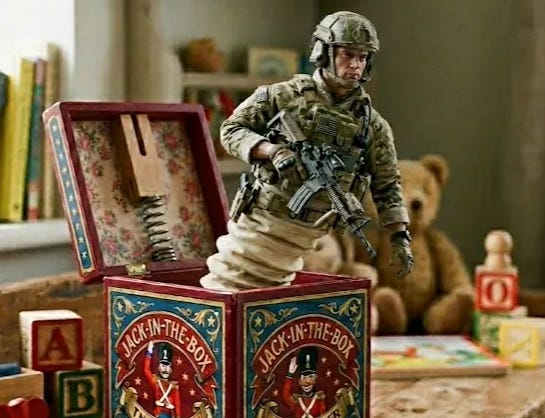
No one really knows why soldiers divorce, abuse drugs and alcohol, and take their own lives more often than their civilian counterparts. I believe that part of the answer lies in how we train soldiers for warfare, yet fail to prepare them for peace. Jack taught me that we crank the handle to make All-American boys and girls spring forward as battle-ready warriors. But we have little idea how to help them settle back into their roles as human beings who can problem-solve, cope, seek help when they need it, and live life to its fullest.
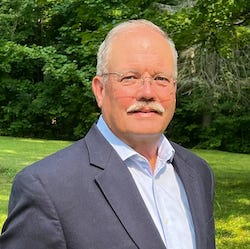
Paul “Greg” Smith. Former US Army Brigadier General with 35 years in uniform. Commanded at every level below division, including military JTF command during the 2013 Boston Marathon Bombings. Current instructor in Counterterrorism Strategy at Nichols College. Paul’s Substack
 | A guest post by
|
I was an Army Chaplain for 30 years. I have observed the continuous threat of combat degrading the mental health of many soldiers, sailors, airmen, Marines. We cannot expect such continuous deployments not to have devastating effects on the mental health of our military. I know it shouldn’t, but I am always amazed at how easily civilian leaders are willing to send our military into our way without considering the cost. It’s as if they consider Service members as expendable or that they can simply return from hostilities unfazed and unchanged. Part of the answer is limiting the use of military force to those global situations that involves existential threats to national security and to protect protecting threatened populations. It means using the soft power of diplomacy and negotiation in foreign affairs and not leading with military action. I am reminded of MacArthur’s words, “it is a soldier above all else that pray for peace for he must bear the deepest wounds and scars of war.” If only our civilian leaders would understand.
Here’s the thing. The fact that we have been constantly at war for over a hundred years IS the problem. That and the fact that you can’t just “fix” the damage done to those who fight those wars, physically or psychologically.